Vietnam


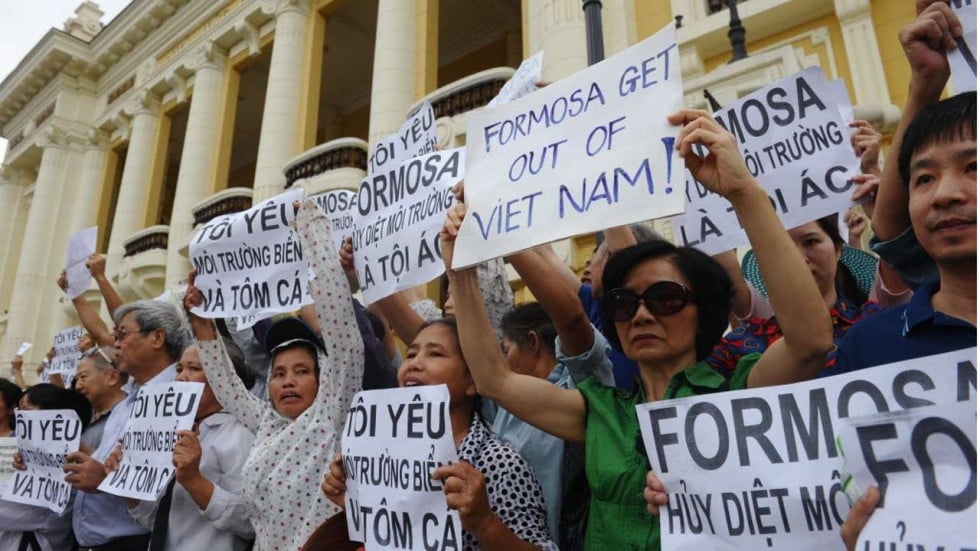
=== Image result for vietnam protests today
=====


lisa pham mới nhất [khai dân trí số>
https://www.youtube.com/results?search_query=lisa+pham+m%E1%BB%9Bi+nh%E1%BA%A5t+%5Bkhai+d%C3%A2n+tr%C3%AD+s%E1%BB%91


===

https://www.youtube.com/channel/UCdcADcVxAwHvQZTjb95TGtg
=========================== NEWS HTD. https://www.youtube.com/channel/UCdcADcVxAwHvQZTjb95TGtg ====================
Biểu tình 5/3/2017
Image result for bom xang
NEWS HTD. https://www.youtube.com/channel/UCdcADcVxAwHvQZTjb95TGtg

Tuesday, June 11, 2013

Ðảng Cộng Sản Việt Nam phản bội nông dân


Ðảng Cộng Sản Việt Nam phản bội nông dân

Lê Diễn Ðức


Trong hai cuộc chiến tranh với Pháp và Mỹ, lực lượng nông dân Việt Nam từng là chỗ dựa vững chắc nhất của đảng Cộng Sản Việt Nam.

Ðây là nguồn cung cấp nhân lực chính cho chiến trường. Sự hy sinh con, cháu suốt chiều dài mấy chục năm là vô cùng to lớn. Người nông dân dành hết mọi ưu tiên cho mặt trận, bất chấp khó khăn, tổn thất với một niềm ước ao duy nhất là đến ngày thắng lợi “người cày có ruộng”.

Thế nhưng, mơ ước của họ đã bị tước đoạt tàn bạo. Chính sách nhà nước thống nhất quản lý bắt đầu bằng cuộc cải cách ruộng đất oan khiên, với gần 200 ngàn nạn nhân, đã phá vỡ mọi tập quán và văn hóa làng thôn. Người nông dân chỉ còn biết đi cày trên thửa ruộng của hợp tác xã.

Sau năm 1975, mô hình kinh tế nông nghiệp tập thể lại được thực hiện trên toàn miền nhưng tiếp tục bị phá sản và bắt đầu từ nửa sau của thập kỷ 80 mới áp dụng hình thức khoán hộ. Tuy nhiên đất đai vẫn là sở hữu của nhà nước.

Ðến năm 1993 lần đầu tiên nông dân được cấp quyền sử dụng đất nông nghiệp trong 20 năm. Ðược thuê sử dụng trong 20 năm nhưng không phải là chủ sở hữu.

Việt Nam có khoảng 25.4 triệu người sống ở khu vực thành thị và khoảng 60.4 triệu người ở khu vực nông thôn. Theo Tổ Chức Lương Thực và Nông Nghiệp Liên Hợp Quốc thu nhập của hai phần ba dân số từ 88 triệu người Việt Nam lệ thuộc vào ngành nông nghiệp.

Năm 2007, Bộ Trưởng Nông Nghiệp Cao Ðức Phát nói rằng: “Việt Nam đứng thứ hai thế giới về xuất khẩu gạo mà hàng năm vẫn còn hàng trăm nghìn đồng bào chỉ được ăn cơm khi ngày lễ, ngày Tết, khi bị ốm”.

Ông Phát nói mức phát triển tại nông thôn Việt Nam vẫn còn rất thấp, và rất nhiều hộ gia đình rơi vào cảnh đói nghèo chỉ sau một đợt thiên tai như lũ lụt, dịch bệnh.

Sau nhiều năm, tình trạng này không hề được cải thiện. Theo tổng cục thống kê, trong tháng 4, cả nước có 59.5 ngàn hộ thiếu đói, chiếm 0.5% tổng số hộ nông nghiệp, tương ứng với 255.2 ngàn nhân khẩu thiếu đói. Tính chung quý I/2013, cả nước có 178.8 ngàn lượt hộ thiếu đói, tương ứng với 737.3 ngàn lượt nhân khẩu thiếu đói.

Sống bằng cây lúa nhưng cây lúa cũng bị bóc lột đến tận cùng. Ép nông dân, thu gom mua lúa gạo nhưng gạo Việt Nam đang được bán với giá rẻ nhất thế giới. Theo Hiệp Hội Lương Thực VFA, giá gạo Việt Nam hiện bán với giá thấp hơn so với gạo cùng phẩm cấp của các nước xuất khẩu gạo chủ lực trong khu vực khoảng 40-50 USD/tấn (gạo 5% tấm của Việt Nam chỉ có 395 USD/tấn; trong khi Ấn Ðộ, Pakistan lần lượt 430 và 445 USD, riêng Thái Lan 530 USD).

Thuê sử dụng 20 năm, nhưng vấn đề đặt ra rất phức tạp khi có nhu cầu sử dụng khác, phát sinh mâu thuẫn, xung đột xã hội. Trung bình mỗi năm, nông dân phải nhường 74,000 ha đất nông nghiệp để xây dựng các công trình nhà ở, đô thị và khu công nghiệp. Ông Cao Ðức Phát cho hay, với mức độ trưng dụng và chuyển đổi đất lúa diễn ra ồ ạt trong những năm qua, việc mất an ninh lương thực quốc gia hoàn toàn có thể xảy ra.

Theo đó, từ năm 2000 đến năm 2007, diện tích đất trồng lúa đã giảm 361,935 hécta - bình quân mỗi năm giảm gần 51,705 hécta, làm thâm hụt sản lượng thóc trên 400-500 ngàn tấn/năm và làm ảnh hưởng đến đời sống và việc làm của ít nhất 100 ngàn hộ nông dân mỗi năm.

Còn theo báo cáo của một số bộ ngành như giao thông vận tải, xây dựng, công thương, nhu cầu trưng dụng đất rất lớn. Và cứ với mức độ trưng dụng và chuyển đổi đất lúa như giai đoạn 7 năm (2000-2007), tới năm 2020 quỹ đất lúa chỉ còn lại 3.4 triệu hécta. Tiến Sĩ Nguyễn Văn Ngãi, Ðại Học Nông Lâm Sài Gòn, cho rằng với đà này, đến năm 2020 sản lượng lúa của Việt Nam chỉ còn đảm bảo nhu cầu tiêu thụ trong nước, chứ không có khả năng xuất khẩu.

Giáo Sư Võ Tòng Xuân nói “Nếu còn ai đó chưa biết rằng con cháu mình sẽ không đủ gạo ăn thì nên gặp gỡ những người nông dân đang đội nắng mưa, chịu đói khát đang đòi quyền được cày ruộng của họ để hiểu rằng nên cùng với nông dân cứu đói cho con cháu của mình”.

Thực chất, đất đai trở thành tài nguyên quý giá nhất trong những năm qua. Các quan chức có quyền cùng các nhóm thân hữu, tranh nhau chiếm đoạt và giàu có bất ngờ nhờ đầu cơ, trục lợi từ bất động sản.

Bài “Vietnams Bauern wehren sich”, đăng trên báo “Neue Zurcher Zeitung” ngày 03 tháng 4, 2012 viết:

“Các quan chức tham nhũng khó có thể chống lại sự cám dỗ là nhượng đất cho các công ty tài chính nhiều tiền hoặc các nhà đầu tư thay vì phân bổ đất cho nông dân. Tiền hối lộ cho họ rất hậu do giá đất tăng nhanh chóng. Những ai muốn thưa kiện tại tòa án đều có nguy cơ là đơn kiện bị từ chối bởi ngành tư pháp thiên vị, hoặc bản án không được thực hiện (...) Một điều không ít xảy ra là các cơ quan nhà nước cũng đã sử dụng một lý do không rõ ràng là vì ‘lợi ích công cộng’ nhằm kết thúc quyền sử dụng đất (của người dân) một cách nhanh chóng.”

Cứ tưởng rằng, hết lòng theo đảng, người nông dân đã cam chịu nặng nề nhất trong cuộc chiến giữ nước, dựng nước, sẽ có được sự đền bù xứng đáng với xương máu của con em họ đã bỏ ra. Nhưng với những “chồng đơn khiếu nại, nặng hơn cả dãy Trường Sơn”, họ đã phải khỏa thân phản kháng, tự thiêu và vật vã ăn nằm trên các vườn hoa Mai Xuân Thưởng, Lý Tự Trọng... Và những tấn bi kịch này còn tiếp tục kéo dài.

Mất đất, nguồn sống duy nhất, phải bỏ quê hương, nông dân từ các miền quê nghèo Nam Ðịnh, Thanh Hóa, Thái Bình lên Hà Nội kiếm sống, hình thành những làng lao động giữa thủ đô.

“Dân cày bị mất ruộng
Biết kiếm việc gì làm
Nhìn cao ốc ngất ngưởng
Mà ruột tím gan bầm!”
(Thơ trái luật - Nguyễn Trọng Vĩnh)

Theo Huỳnh Phong Tranh, tổng thanh tra chính phủ, từ năm 2008-2011, đã có trên 1,571,500 lượt người đến khiếu nại tố cáo và cơ quan nhà nước tiếp nhận, xử lý 672,990 đơn thư. Có tới 70% khiếu nại của công dân có liên quan đến đất đai mà nhiều nhất là khiếu nại về bồi thường, hỗ trợ, tái định cư khi nhà nước thu hồi đất.

Thực thi chính sách “đất đai thuộc sở hữu toàn dân, nhà nước thống nhất quản lý”, đảng CSVN với độc quyền lãnh đạo đã thâu tóm toàn bộ tài nguyên đất của cả nước vào tay mình và toàn quyền định đoạt.

Trong bài “Thâu tóm đất đai”, nhà văn Phạm Ðình Trọng viết:

“Thâu tóm đất đai đã tạo ra dòng người dân oan khiếu kiện đất đai kéo dài vô tận trên cả nước và kéo dài vô tận trong thời gian, đã làm hư hỏng nhiều quan chức trong bộ máy nhà nước. Thâu tóm đất đai, một người đơn độc không thể làm được mà phải là cả một hê thống quyền lực nhà nước. Thâu tóm đất đai đã làm cho cả một hệ thống quyền lực nhà nước đối lập với dân, làm tha hóa bộ máy nhà nước, gây mất ổn định xã hội, thủ tiêu thế mạnh của những vùng đất đặc thù, làm mất mát, hao hụt, hoang phí rất lớn đất vàng, đất bạc của nông nghiệp, đẩy nhiều gia đình nông dân vào cảnh khốn cùng, không còn đường sống.

Thâu tóm đất đai đã tàn phá cả cơ cấu, nền tảng xã hội, phá nát cả qui hoạch tổng thể, hợp lý của đất nước, gây nguy hại lớn lao và lâu dài gấp nhiều lần thâu tóm ngân hàng lại chưa được coi là tội phạm nên thâu tóm đất đai đã ngang nhiên diễn ra từ hàng chục năm nay và đang diễn ra quyết liệt, rộng khắp trên cả nước.”

Bà Lê Hiền Ðức, công dân chống tham nhũng nổi tiếng trong bài “Phản cách mạng đã rõ ràng” viết:

“Ðảng Cộng Sản và nhà nước CHXHCNVN thừa nhận ở Việt Nam, hệ thống văn bản quy phạm pháp luật về đất đai rất chồng chéo, rắc rối, có nhiều thiếu sót và mâu thuẫn nhau. Nhưng ai là tác giả của chúng? Chính là họ. Ai được hưởng lợi từ chúng? Cũng chính là họ.”

“Cuộc cách mạng mà lớp người chúng tôi đã tham gia 60-70 năm trước nay đã bị phản bội một cách trắng trợn, triệt để. Công hữu, sở hữu toàn dân chỉ là chiêu bài để tư hữu hóa, tư nhân hóa, biến của chung thành của riêng.”

“Qua việc ‘tích cực’, ‘hăng hái’ tham gia các vụ cưỡng chế, thu hồi đất đai đối với người dân, những lực lượng mang danh ‘ủy ban nhân dân’, ‘công an nhân dân’, ‘quân đội nhân dân’, ‘viện kiểm sát nhân dân’, ‘tòa án nhân dân’... ở Việt Nam đã nghiền nát, phá sạch, đốt sạch chữ ‘nhân dân’ trong cái tên của chúng.”

“Ðã sống qua thời Việt Nam còn chịu ách cai trị của phong kiến, ách đô hộ của thực dân, phát-xít, đã hoạt động hậu địch trong kháng chiến, đã xem phim ảnh, nghe kể lại hoặc trực tiếp chứng kiến hàng trăm, hàng ngàn vụ chính quyền ‘của dân, do dân, vì dân’ cưỡng chế, thu hồi đất đai, nhà cửa, tài sản đối với người dân dưới chế độ xã hội chủ nghĩa, song tôi chưa bao giờ thấy người dân bị đàn áp một cách man rợ đến như thế, với quy mô lớn như thế!”


__._,_.___

Tướng Úc nhưng đứng đầu quân Mỹ


Tướng Úc nhưng đứng đầu quân Mỹ

Tướng Úc Richard Burr (phải)

Tướng Úc Richard Burr (phải)


Trọng Nghĩa        


Cho đến nay, có lẽ chỉ có trong các lực lượng quốc tế mới có tình trạng một sĩ quan nước này lại được trao quyền chỉ huy quân đội nước khác. Thế nhưng, từ tháng Giêng 2013, nhân vật số ba của Lục quân Hoa Kỳ tại vùng Thái Bình Dương lại là ông Richard Burr, một viên tướng hai sao người Úc, được quân đội Úc biệt phái qua chỉ huy lính Mỹ. Theo giới quan sát, đây là một biểu tượng thật rõ ràng của chiến lược xoay trục qua châu Á-Thái Bình Dương của Mỹ.


Là biểu tượng, nhưng quyền hành của viên chỉ huy người Úc này không hề mang tính chất tượng trưng chút nào, vì ông là Chỉ huy phó đặc trách các chiến dịch của lực lượng Mỹ mang tên chính thức là US Army Pacific (USARPAC). Lực lượng này, theo ghi nhận của hãng tin Pháp AFP, có đến gần 80 ngàn quân, đóng tại khắp nơi trong vùng. Bộ chỉ huy, trụ sở tại Hawaii, như vậy có thẩm quyền trên các tất cả các binh sĩ Mỹ trong một khu vực trải dài từ Maldives đến tận Alaska và California, thông qua bán đảo Triều Tiên.

Phát biểu với báo giới tại Lầu Năm Góc ngày 13/05 vừa qua, Tư lệnh lục quân Mỹ tại vùng Thái Bình Dương, tức là nhân vật số một của USARPAC, tướng ba sao người Mỹ Francis Wiercinski thẩm định : « Sự hiện diện của tướng Burr tại tổng hành dinh của chúng tôi là biểu tượng của chiến lược mới của Mỹ và liên minh lâu đời giữa Hoa Kỳ với Úc ».

Theo Jim Guzior, một sĩ quan lãnh đạo thuộc Lục quân Mỹ vùng Thái Bình Dương thì tướng Richard Burr, nguyên là một sĩ quan thuộc lực lượng đặc biệt Úc, « có cùng những quyền hạn và cùng những nhiệm vụ » tương tự như một sĩ quan Mỹ. Trên ông như vây chỉ có hai người.

Chiến lược của Mỹ gọi là « xoay trục » qua châu Á-Thái Bình Dương, được Tổng thống Barack Obama chính thức loan báo vào tháng 1 năm 2012, đặt ưu tiên cho khu vực này và sẽ chi phối quân đội Mỹ trong mười năm tới đây.

Trong bối cảnh đó, lực lượng quân sự Mỹ tại vùng Châu Á Thái Bình Dương sẽ rất được coi trọng. Một dấu hiệu cụ thể : Kể từ tháng Bảy sắp tới, người nắm giữ vị trí số một của Lục quân Mỹ trong khu vực sẽ là một đại tướng 4 sao, cấp cao nhất trong quân đội Mỹ. Tư lệnh hiện tại của lực lượng này hết sức phấn khởi khi ghi nhận rằng đó sẽ là « lần đầu tiên từ 40 năm nay ».


] Đảng cộng sản Việt Nam: Nhục đến thế là cùng

] Đảng cộng sản Việt Nam: Nhục đến thế là cùng
 on behalf of; nam hoai <

Đã là con người ai cũng có nỗi uất ức! Mà khi nỗi uất ức đó đã lên đến tột cùng thì cho dù ở một đẳng cấp nào trong xã hội lúc đó cũng có thể văng ra những gì có thể văng... vãi ra những gì có thể vãi... cho hả cơn giận.
 
Nơi đây bản thân tôi và có lẽ hầu như tất cả những người VN yêu nước đều không còn kềm chế được nữa trước nỗi nhục của Tổ Quốc, giống nòi. Uất ức quá tôi xin quí vị thứ lỗi cho phép tôi được nói lên rằng: “Đảng csVN có nhục như thế nào cũng kệ m chúng nó!” cả đời bọn nó chui trong háng của bọn Hán cộng mà ăn chất thải nên không biết nhục và liêm sỉ là gì!
 
 Chúng ta phải nói lên cho cả thế giới biết rằng bọn cộng sản Việt Nam (csVN) tuy có người sinh ra và lớn lên trên mảnh đất VN (số còn lại chắc là sinh ra bên Tàu) nhưng chúng không là dòng giống Lạc Hồng tộc Việt mà trong người chúng mang máu Mác-Lê-Maoist... là hình người nhưng cốt quỉ, là chất thải của xã hội, là mạt hạng của thế giới loài người... là... là... tất cả những gì ghê tởm nhất mà nhân loại tránh xa.


Tôi nói không hề sai! Không phải xuất phát từ cơn giận dữ mà nói quá như thế. Các dân tộc trên thế giới hãy nhìn xem Hán cộng xâm chiếm bờ cõi biên cương đất nước chúng tôi từng giờ từng phút, giết hại dân lành chúng tôi bất cứ lúc nào có thể.
 
 Thế mà bọn csVN tự xưng là lãnh đạo đất nước (không được dân trao quyền) tự cho mình có cái quyền đứng trên cả Hiến Pháp, Pháp Luật của đất nước chúng tôi mà không hề có một chút mảy may xao động!. Mà ngược lại còn thốt lên rằng “phải giữ yên để ổn định chính trị!?” phải “bình tĩnh để giữ hòa khí ngoại giao!?” và để “Duy trì tình giao hảo 16 vàng, 4 tốt!?”.
 
Các bạn có thể chấp nhận yên lặng để giữ tình giao hảo giềng xóm bạn bè một khi sự cố xảy ra chỉ là hơn thiệt nhỏ nhoi “con chó, con gà” hay “trẻ nít giành đồ chơi... ”.
 
Đàng này chúng ỷ thế cậy quyền, vai u thịt bắp, ngang ngược thô lỗ vô học mà đánh giết chết con cháu nhà mình, đất vườn nhà cửa của ta chúng chiếm sạch khiến vợ con nhà mình trôi dạt đầu chợ cuối sông... Chúng xem tài sản nhà mình như của hồi môn hay di sản của tổ tông nhà nó để lại thì các bạn có yên lặng để giữ tình giao hảo (bất hảo) được nữa không?
 
Hay lúc đó các bạn không còn gì để mất mà sống mái với chúng một phen cho dù sao chăng nữa thì cũng để hạ hồi mới tính!? Thưa các bạn, những hoàn cảnh như trên thì trong lịch sử đất nước chúng tôi đã có nhiều phen, cũng hiện tình như ngày nay mà có thể lúc đó bọn Hán tặc còn hung hãn tàn bạo hơn thế nữa mà Tổ Tiên, Tiền Nhân chúng tôi không hề chịu khuất phục, không hề chịu nhục, cam tâm làm nô lệ như bọn csVN ngày nay mà Tiền Nhân, Anh Hùng, Liệt Nữ của chúng tôi trên dưới một lòng, gái trai già trẻ đều thề “Quyết tử cho Tổ Quốc quyết sinh” và cuối cùng bọn Hán tặc cũng phơi thây trên chiến địa khắp sông biển núi rừng... số còn lại cúi đầu cắm cổ chạy thục mạng trối chết về Bắc phương mà không dám quay đầu nhìn lại.


Các bạn cứ thử nhìn xem trên toàn cõi hành tinh này có một xứ sở nào, đất nước nào mà như đất nước VN chúng tôi không? Nhân dân, tuổi trẻ đứng lên chống ngoại xâm cướp nước vì nhà cầm quyền csVN âm thầm bán nước, tiếp tay cho giặc mà im lặng trước hành động xâm lăng của giặc Tàu phù thì tuổi trẻ VN chúng tôi bị xem là “phản động” là “thế lực thù địch”!
 
Các bạn có thể nào chấp nhận một đội ngũ tự xưng là nhân danh công lý, khoát áo quan tòa để đứng ra xử tội người yêu nước đứng lên chống ngoại xâm cướp nước của mình hay không? Đất nước chúng tôi bị giặc Tàu xâm chiếm mà người yêu nước chúng tôi bị phạm vào cái tội “Nói điều không hay cho Trung Quốc???” và bị xử tù một cách dã man nặng nề chưa từng có! Như vậy đối với một đứa bé miệng còn hôi sữa cũng biết được bọn nào là bọn bán nước, kẻ nào là kẻ thù của dân tộc rồi.


Khi tôi viết những dòng này thì đất nước chúng tôi, biển đảo của chúng tôi đang bị hàm cá mập Hán tặc nuốt từng mãng lớn. Ngư dân tôi đang dong ruổi ngày đêm tìm cái ăn, cuộc sống trên hải phận, quê hương của mình mà bị chém giết, đâm chìm mất xác chưa tìm ra được vào ngày 1/6/2013, rồi sáng ngày 2/6/2013 trên Thủ Đô đất nước chúng tôi bọn côn an còn đảng còn mình tay sai csVN đã ra tay tàn sát dã man khốc liệt người yêu nước của chúng tôi đứng lên xuống đường phản đối Tàu cộng xâm lăng để nói lên tiếng nói yêu nước của mình.
 
Thế mà cũng vào ngay những lúc này bọn bán nước VN đeo mặt nạ lên diễn đàn Quốc Tế Shangri-La ở Singapore ngoảnh mặt làm ngơ như không biết gì trước nỗi đau của dân tộc trước sự mất mát, chết chóc của ngư dân và cúi đầu trước ngoại bang mà xin được một chút niềm tin, niềm tin chiến lược???


Đó! Chiến lược đó các bạn ạ. Về phía csVN là chiến lược lâu dài, tin vào một niềm tin vĩ đại là 16 vàng và 4 tốt đồng thời mãi mãi im lặng cúi đầu cho dù nhân dân thịt nát xương tan, tiền đồ bị cướp trăng!
 
Đó là niềm tin chiến lược về phía bọn bưng bô csVN, còn về phía bọn Hán cộng hung hăng, bọn cướp ngày cướp cạn thì niềm tin chiến lược như thế này này... các bạn.- Cả Biển Đông là ao nhà của Trung cộng, cho nên Trung cộng muốn cho ai lại qua hay “lượm mót” một vài con cá trên ao nhà của chúng là tùy quyền của chúng.
 
Lệnh cấm đánh bắt hải sản trên Biển Đông là do chúng toàn quyền áp đặt và vào mọi thời điểm nào có thể.
 
Chúng còn cho chúng có cái quyền kiểm tra bất cứ tàu bè nào qua lại nơi này khi chúng muốn. Đó là niềm tin chiến lược mà Trung cộng đưa ra mà bọn bưng bô csVN phải cúi đầu tuân mệnh. Cũng ngay trên diễn đàn Quốc Tế này, ngày 2/6/2013 tên tướng Tàu Thích kiến Quốc hay là Thích đủ Thứ gì đó đã ngang nhiên cao giọng tuyên bố rằng: “Lập trường của chúng tôi đối với các biển Đông Trung Hoa và Nam Trung Hoa là thuộc chủ quyền của Trung Quốc. Đó là lập trường rất rõ ràng.” và “Do đó các tàu chiến Trung Quốc và các hoạt động tuần tra của chúng tôi là hoàn toàn hợp pháp và không có gì phải tranh cãi.”


Đấy! Niềm tin chiến lược là ở chỗ này. Các bạn chứ cười mà oan và tủi hổ cho dân tộc VN chúng tôi vì bọn csVN là nô thần, tôi tớ cho Tàu cộng chứ không phải là dân tộc VN mà là thứ con rơi, con rớt nhằm trên đất nước chúng tôi, ăn nhờ ở đậu trên quê hương tôi, không mẹ không cha, không ai dạy bảo cho nên thế.
 
Chứ vong bản đến mức độ nào, bao giờ cũng có phút giây chạnh lòng mà nghĩ về tổ tiên, dân tộc, giang san đất nước của mình.


DLB

Monday, June 10, 2013

Kinh Tế là Huyết Mạch của Quốc Gia


Kinh Tế là Huyết Mạch của Quốc Gia


Chính trị, chiến lược, an ninh quốc phòng, độc lập tự cường, ..., đều bị chi phối bởi huyết mạch kinh tế của quốc gia. Vì vậy người muốn học khoa chiến lược cần phải có kiến thức nhiều lãnh vực khác, đặc biệt là môn kinh tế.

Xin liệt kê hai thí dụ về chủ đề kinh tế.

1/. Bài " Thượng Đỉnh Mỹ -Trung 2013: Trung Quốc Ồ Ạt Bỏ Tiền Đầu Tư Ở Mỹ " của Nguyễn Văn Khanh


http://www.vnwashingtondc.com/index.php?option=com_content&view=article&id=2267:thng-nh-m-trung-2013-trung-quc-t-b-tin-u-t-m&catid=308:hoa-k&Itemid=59


Tác giả nêu rõ sự kiện nhưng không phân tích và bình luận đoạn dưới đây:


"Chính các nhà phân tích kinh tế tại Washington D.C. cho rằng rõ ràng chính phủ Hoa Kỳ đang nỗ lực thu hút vốn đầu tư của Trung Quốc để giúp quốc gia vượt qua những khó khăn kinh tế, cho dù chính phủ biết “những công ty từ Bắc Kinh sang đây đầu tư không chỉ nhắm vào lợi nhuận, mà còn lý do khác nữa”, theo nội dung bản phúc trình của Ủy Ban Quan Hệ Hoa Kỳ-trung Quốc gửi cho Quốc Hội Liên Bang hồi năm ngoái, ý muốn nói các viên chức hành pháp đã coi “đầu tư” quan trọng hơn an ninh quốc gia."

Câu hỏi: (1) Tại sao chính phủ HK " lại nỗ lực thu hút vốn đầu tư của Trung Quốc để giúp quốc gia vượt qua những khó khăn kinh tế, cho dù chính phủ biết “những công ty từ Bắc Kinh sang đây đầu tư không chỉ nhắm vào lợi nhuận, mà còn lý do khác nữa”?


                    (2) Tại sao " các viên chức hành pháp đã coi “đầu tư” quan trọng hơn an ninh quốc gia."?

Câu trả lời theo quan điểm cá nhân.

(1) Obama Administration chịu gánh nặng của tình trạng kinh tế 'severe recession' từ năm 2008. Đây là tình trạng ' tuột dốc kinh tế'. Vì vậy kêu gọi đầu tư vừa để giảm bớt tốc độ tuột dốc vừa giúp dân chúng có công ăn việc làm, là một chiến lược kinh tế khả thi trong ngắn hạn. Nên nhớ nếu kinh tế tuột dốc không có sức ngăn cản thì nền an ninh quốc phòng càng lâm nguy tức khắc.

(2) Đầu tư của TQ có lợi cho nền kinh kế trong giai đoạn ngắn, mức độ tổn thương cho nền an ninh quốc gia không đáng quan tâm trong giai đoạn ngắn, nếu chính phủ có chiến lược kinh tế dài hạn; " Made in U.S.A." hay đối thoại cân bằng mậu dịch là hai thí dụ. Hãy nhìn thái độ cứng rắn của TT Obama về vấn đề "cyber attacks", hay nhiều vấn đề khác hiện nay và trong tương lai như nạn ô nhiễm, an ninh Biển Đông, Biển Bắc và Nam, cân bằng mậu dịch trong ba tháng tới,...

2/. Hoà bình thế giới tuỳ thuộc vào nhiều yếu tố. Hiện nay HK vẫn là cường quốc số một về nhiều phương diện như kỹ thuật, quân sự, kinh tế,...Phải chăng đó là lý do TRQ đang có tham vọng muốn HK xem TRQ như một cường quốc ngang hàng với HK trong cuộc gặp gỡ vừa qua tại California?

Thiển nghĩ, nền kinh tế HK vẫn chưa đạt được mức độ tăng trưởng tối đa để tiếp tục duy trì vai trò số một cấp lãnh đạo thế giới trong dài hạn vì thiếu sự đồng thuận của lưỡng đảng về kinh tế. Phải chăng nếu HK tăng trưởng kinh tế tối đa trong ba năm tới, TRQ sẽ từ bỏ tham vọng bành trướng lãnh thổ để cùng góp công vào nền hoà bình và văn minh thế giới?

Mời đọc
:

In Search of a Possible Bipartisan Economic Solution
       
 Abstract  


The main goal this essay is to provide some economic and historical facts for providing a possible solution to our current economic policy dilemma, thus improving the welfare of all citizens. The ultimate goal is to enhance our nation's capacity to deal with internal and foreign threats today. The bottom line of solving the problem is: we need a bipartisan concept with compromise and mutual respect with compassion. Tax reform, determination of which spending is productive and which is wasteful, trade negotiations, heath care reform, ... are essential economic issues needed to be solved by our Congress and the President. 

Introduction

As an independent voter I appreciate the efforts of our government and our Congress to come up with a feasible solution for our debt and the welfare of all citizens. However, due to the lack of bipartisan compromise, much time was wasted last summer on unfeasible solutions such as "Cut, Cap, Balance".
The feasible solution can only be achieved if both sides are honest and transparent. In fact, we can do better than what our Congress wants.


There is a solution satisfying Congress's goal of cutting 230 billion US$/year, but it requires both sides to look at feasible mathematical solutions such as increasing taxes for wealthy people, cutting wasteful spending, raising the retirement age, eliminating tax loopholes, eliminating earmarks, cutting unnecessary subsidies, reducing fraud, intelligent regulations, moderately cutting the entitlement program, lowering benefits for higher retirees,...
It is believed that fraud costs the government between 60 billion US$ and 90 billion US$ each year.  Fraud prevention will be key to paying for President Barack Obama's health care overhaul. Did the president have the plan from the time he assumed the presidency? "When President Obama took office he asked Attorney General Holder and me to make fraud prevention a cabinet-level priority," Sebelius commented on May 2, 2012. On this day of a nationwide bust of scams, 107 doctors, nurses, and social workers were charged with Medicare fraud which swindled 452 million US$ from the program.
Voters are facing with two schools of thought, balance the budget  by cutting federal budget  versus protecting the entitlement program. This dilemma is a complex issue in many aspects as many great politicians has foreseen many years ago. President Franklin D.Roosevelt signed the Social Security Act on August 14, 1935 . In 1979, President Carter issued an Executive Order to conduct a two-year study of the national pension system. Then President Reagan adapted President Carter's initiative to increase the retirement age gradually from 65 to 67 over 25 years.
President George W. Bush attempted to privatizing the social program but failed to persuade the Congress and people in 2005, Obama Care Program with an ambitious universal care. Nevertheless Obama Care still has to face with cost increasing and legal issue of individual right.

There are some advantages of the entitlement program that may justify the existence of the entitlement program in political, economic and cost aspects.
The self-destruction of capitalism as seen by Karl Marx would occur when a large gap forms between the very rich and the poor working class, a catalyst for social unrest and a revolution;
the entitlement program is a remedy for our system of free enterprise.
People on the entitlement program are main sources of consuming; a matter of demand-supply and its beneficial consequences in economic principle.
Food stamp Program in the short range is a weight between the real cost and the benefit. The benefits of stimulating the economy by job creation- demand and supply of the free market- and social safety-reducing the crimes, heavy cost for legal trial and prisoners. How to reduce the burden of food stamp program in the long range? What are feasible measures to make them more productive in the skilled working force?

Is the US Economy Headed in the Right Direction?


Some indicators show that the economy is gradually recovering.
During three years and a half the economy has shown both positive and negative signs.
Our economy has begun to recover gradually after three years of a severe recession. We were faced with an unemployment rate of 12.5% on Dec 2008 at 11 PM due to many reasons such as house bubbles, an escalating foreclosure rate, banks refusing to loan, a 700 billion US$ bail out in 2007 to rescue Bear Stearns, AIG, Fannie Mae, Washington Mutual, Indy Mac Bank, ....
In 2009, the government continued the economic stimulus plan with about 185 billion US$. Consequently, it halted the economic free fall and ended the recession. However, we still have a moderate reduction of the unemployment rate from 12.5% in Dec 2008, to about 10% from 2010-2011, and to about 8.1% on May, 2012.  
In 2012, many positive economic indicators prove the stimuli of Presidents George W. Bush and Barack Obama have worked.
The Dow Jones Industrial Average (DJIA) was around 8,550 at the end of 2008 but has risen above 13,000 on May 02, 2012.
The rate of unemployment has dropped to about 8.2% on April and 8.1% on May, 2012. Private companies added 228,000 jobs in February 2012, 201,000 jobs in March, and 119,000 jobs in April. Personal income rose 0.4%. 
Starting in 2010, we have had annual net Growth in "Made In America" manufacturing jobs in contrast to the annual net losses we had every single year many years before.
More than 210,000 "Made In America" manufacturing were created in 2010, more than 233,000 in 2011, and more than 120,000 in the first 3 months of 2012.
The National Domestic Product has gradually increased from 2009 to 2011.

It appears that during these 3 or 4 years the speed of economic recovery is slow because unemployment is still high... but it is a good question to ask "Why?".
Many economists have felt disappointed when they compared the historical rate of economic recovery under the Obama Administration with that under the Reagan Administration and that after the Great Depression to justify their point of view. As a matter of fact, they forgot many more critical factors which explain the sluggish recovery, such as the cost of funding wars and anti-terror operations, the burden of debt interest-about 300 billion US$ per year-, the international financial crisis, 100 billion US$ per year from Bush tax cuts, the top tax rate is low -35%- compared with high tax rates during the first five years of Reagan's Administration -from 69.13% to 50%-,
Reagan's spending rose 10.2% in the first two years and a half while Obama's spending only rose 2.6% (that is almost 4 times less than Reagan's spending), and finally the current extreme partisan ideology of Congress (President Reagan did not have problems with his Congress),...
The true fact is the Reagan Administration and the administrations following the Great Depression did not deal with current complex economic situations. Specifically, it is a logical fallacy to use historical facts to make a negative judgement about the current slow economic recovery; each case is unique. This assertion also somewhat justifies increasing the debt about 5.4 trillion US$ from 2009 to 2012; perhaps the cost of war would be close to 3 trillion US$ during 4 years. It also may imply that more spending and a higher top tax rate are factors which contribute to a fast economic recovery.

Is There Any Hope to Accelerate Economic Recovery over the Next 4 Years?


Obama's plan to withdraw combat troops is one of many indicators to be considered; perhaps saving trillions of US$ during the next 4 years. Future indicators may contribute to our optimistic hope:
The agenda of balancing the budget and reducing the debt is a feasible combination of many policies in such way that the solution is a balanced one (not harmful to economic growth): Raising or eliminating the social security tax cap, raising additional Medicare taxes for single and married couples with higher income, substantial reduction of social security retirement benefits for those with a very high income, tax reform, raising the top tax bracket for the top 10%, moderate cutting of the entitlement program, fraud prevention, increasing production of "Made in America" goods, trade negotiation, a moderate rise in the retirement age and early retirement age, eliminating waste by a balance between management costs and the effectiveness of program achievement, reducing earmarks, tax reform, ... Combining the Bush tax cut expiration with this agenda, the government may  have an addition revenue of at least 600 billion US$ which may used to pay the debt interest -about 300 billion US$-  and 300 billion US$ for additional government spending. 

Are Austerity and not Raising Tax Rates Alternatives to Speed up Economic Growth?

Some negative aspects are needed to be addressed:
The IMF's Christine Lagarde, the World Bank's Robert Zoellick, and the WTO's Pascal Lamy have the same economic viewpoint:  Focus on policies which strengthen growth, employment, and the quality of life in every part of the world. Extreme austerity leads to a lack of demand and hence less supply; consequently more unemployment and slow growth. Austerity also means less quality of life. The economic austerity in Greece is a good lesson.
Recently in Europe, spending is now preferred to austerity.
The greatest concern of austerity is a reversal on the current trend of economic recovery, which could result in an economic "Armageddon."
Therefore, there are many reasons to be hopeful and patient with the current economic policies rather than take a heavy economic risk by implementing extreme austerity policies.


Mixed Signals and More Visionary Tasks

Nevertheless our economy still faces many uncertain years ahead. U.S. factory orders dropped 1.5% in March 2012, the biggest drop since March 2009, but still less than the 1.6% expected. U.S. personal spending rose 0.3% in March, below estimates of a 0.4%  gain. Private companies' rate of adding more jobs slowed down since February 2012. The annual average government budget deficit is about 1.3 trillion US$.
President Barack Obama’s recent statement about bringing manufacturing jobs back to the US is a good start to reducing our trade deficit problem;
"Made in America" is one concrete example. Nevertheless, an overall plan needs to be followed up with effective actions to force real change from trading partners like China. The fact is the US has imported more from Europe -382 billion US$- than China -365 billion US$- but the difference is that Europe also buys a substantial amount from the US -286 billion US$- whereas China does not -92 billion US$-. Moreover we import 4 times as much from China than we export to China. The main way to deal with our debt with China is to reduce our demand for Chinese products by increasing "Made in America" products. As a matter of fact, China still has leverage by selling our US Treasuries. Is it time for our patriot investors to buy more US Treasuries in the future to eliminate the Chinese economic threat and also reduce our demand for Chinese products.

Dealing effectively with our trade balance with China is the first step to reduce our deficit. Due to our severe economic recession at the end of 2008 our
annual deficit is an average of 1.3 trillion US$ from 2009 to now. The bottom line is we need a bipartisan cooperation between our Congress and the President to come up with a feasible annual budget; a reasonable compromise is a must between the two parties.

Providing the most feasible government budget is a critical task to boost our economy, reduce the deficit, and pay off the debt in the long range. It is necessary that people put their country over their partisan political views. This will happen when both sides together look at a feasible solution based on economic experience from the last 20 years and follow the positive results and avoid the negative ones.

The basic principles for a balanced budget and the gradual repayment of debt is that the government's revenue must be greater than its expenditures and we must have a strategy for economic growth.

We must consider the dilemma of tax cuts for the top 10%.  One side of the argument is: A tax cut would boost the economy because the top 10% are job creators. The problem of that argument is: It's only effective for a short time and it's counter productive in the long range. Historical facts show that lower taxes have not resulted in economic growth: According to the Census Bureau median household incomes declined from 2001 to 2008. Moreover, the debt grew at an average of
about 389 billion US$ per year, and created more national debt; the public debt rose from 26.1% of GDP in 1980 to 41.0% of GDP by 1988 In dollar terms, the public debt rose from 712 billion US$ in 1980 to 2,052 billion US$ in 1988.
Increasing taxes on wealthy people and profitable corporations has reduced national debt in the past; here is another piece of historical evidence, the rate of debt growth under Bill Clinton was only about 174 billion US$ per year.

The basis of our tax system is Progressive Tax Theory; the more one earns, the higher their tax bracket is. The basic concept of Laffer Curve Theory is if the tax bracket is too high or too low, then government revenue will be two low . Therefore the optimum tax bracket is simply the maximum of the Laffer curve. Unfortunately the Laffer Curve cannot define the optimum point. Indeed the Laffer Curve is a very poor and undefined mathematical model - it would never stand up to serious mathematical analysis. Therefore it is very controversial. For instance, people have come up with many different curves, and many different optimal points. 

Actually Reagan, Bushes and current Republican Congressmen have used this theory to try to boost the economy when they thought that the optimum tax rate is about 30% or 35%. In fact, the Laffer Curve may have the optimum point at 50% if the Laffer curve is a parabola. President Dwight Eisenhower's highest tax rate is 91% and the economy did not stop growing. From 1954 to 1963, the top tax rate is 91%, then it was reduced from 77% to 70% from 1964 to 1980. President Reagan reduced it further from 50% in 1982 to the lowest tax rate of 28%.
Today the US has the lowest top tax rate -35%- compared with many developed countries where the top tax rate varies from 40% to Denmark's 62.28%. Perhaps the top rate of the world
is France's 75%; Hollande proposed the following during his campaign.
 
History of national debt may prove that the optimum tax bracket is higher than 50%. Consequently, President Ronald Reagan (1981-1989) inherited roughly 908 billion US$ in debt and took it up to 2.6 trillion US$ after 8 years; an increase of 186%.
President Bill Clinton (1993-2001): Took Bush’s 4.2 trillion US$ up to 5.7 trillion US$, a 36% increase. President George W. Bush (2001-2009) inherited Clinton’s 5.7 trillion US$ and ended with 10.6 trillion US$, an 86% increase. Recently, President Barack Obama (2009-2010): So far, has taken Bush’s 10.6 trillion US$ up to 13 trillion US$, an increase of 23%.
The Buffet Rule's purpose is to find the optimum point of the Laffer Curve by increasing the top bracket, based on the historical facts mentioned above.

Considering inflation as one factor, a top tax bracket of 90% is not feasible for today. Perhaps considering many other factors as well, the feasible top tax bracket is between 40% and 50%. The top tax bracket percentage (40% - 50%) applies only to the amount of income exceeding 1 million US$. The remaining 1 million US$ is taxed according to the current progressive tax rate of 35%.

 A Misconception of Raising the Tax Bracket for Millionaires


There has been a misconception that raising the tax bracket for millionaires essentially amounts to a redistribution of wealth. Indeed the Buffet Rule is not a redistribution of wealth. This negative and misleading political statement has indeed created a state of panic and paranoia among uneducated and rich voters because they are confusing the usage of “redistribution of wealth” in the sense of the Bolshevik Revolution in 1917 with Senator Obama’s usage of “redistribution of wealth” in the sense of free enterprise and American democracy. A politician's negative remarks in 2008 have triggered conservative talk show hosts to mislead the American people by labelling Senator Obama’s economic policy as a “socialist” policy. They went further and labelled Senator Obama as a communist in 2008. The truth is that the Bolshevik redistribution of wealth is the confiscation of all private property of affluent people and the redistribution of this property to poorer people, based on the historical facts of the Bolshevik Revolution in 1917. The Russian communist government used literature as propaganda – describing political and economic change only in a positive light. Nevertheless, during the 1950’s and 1960’s many Russian liberal authors such as Boris Pasternak, who wrote a masterpiece “Doctor Zhivago” in 1957, attacked the doctrine of communism. A solid example of a Bolshevik redistribution in recent history is the action of the Vietnamese communist government in confiscating the property of rich and middle class Vietnamese in 1975 after conquering South Vietnam. On the contrary, Senator Obama’s meaning of the term “redistribution of wealth” for positive change is merely a change in the rate of income tax. Specifically, Senator Obama’s economic policy is to reduce the income tax for at least 90% of Americans, who have an income of less than 250,000 US$, and a proportional income tax increase for the wealthy people.
   

Why and How to Raise the Government Revenue?

Do we need tax reform to eliminate many loopholes based on the following facts? 
In 2009, of the 236,883 taxpayers with 1 million US$ or more in adjusted gross income, 1,470 (0.62 percent) paid no federal income taxes.
in 2007, before the Great Recession, there were more millionaires,  but fewer escaped paying federal income taxes - just 961 (0.25 percent) paid no federal income taxes in this year.

The goal of raising the tax bracket for the top 10% and tax reform is to raise government revenue, a critical agenda to boost the economy; as long as the economy strengthens, there is a chance to balance the budget, pay off the debt gradually, reduce unemployment, protect our national security, and continue to maintain our position in the world.
 
Why Do We Need a Real Centralized Medicare System for All Citizens?


America desperately needs a real centralized Medicare system for all citizens. Healthcare varies around the world but thirty-two of the thirty-three developed nations have universal health health care except the United States.

Almost all wealthy nations provide universal health care except the US. Although we are the best developed country, our ranking in healthcare is about 37th world wide. This is a complex issue due to many aspects, such as freedom of choice, individual rights, constitutional disputes, the costs versus the benefits, its economic impact, the welfare and security of all citizens, national security considerations,...

One interesting individual right is that the government has no right to impose on an individual the payment of an insurance premium. "I am healthy at this time, therefore I don't need such a wasteful premium." The main problem with this statement is that nobody knows his or her future health condition. The fact is that health care costs are very high and the sick person will soon run out of all assets if there is no health insurance . Finally, they have to apply for the Medicaid program. That will trickle down into the economy due to the financial burden on the government. About 20 million Americans without medical insurance will apply to the program even though they have pre-conditions.
This is a second critical issue needing a solution from both Congress and the President after knowing the Supreme Court's verdict on its legality or a balanced solution weighing the following factors: individual rights, national interest, the welfare of all citizens, social security, compassion,....It's too early to know, but the health care plan can be modified around the parts that the Supreme Court rejects.

The agenda of balancing the budget and reducing the debt is a feasible combination of many policies in such a way that the solution is a balance one ( not harmful to economic growth) in such a way that the solution is a balanced : Raising or eliminating the social security tax cap, raising additional Medicare taxes for single and married couples with higher income, substantial reduction of social security retirement benefits for those with a very high income, tax reform, raising the top tax bracket for the top 10%, moderate cutting of the entitlement program, fraud prevention, increasing production of "Made in America" goods, trade negotiation, a moderate rise in the retirement age and early retirement age, eliminating waste by a balance between management costs and the effectiveness of program achievement, reducing earmarks, tax reform, ... Combining the Bush tax cut expiration with this agenda, the government may  have an addition revenue of at least 600 billion US$ which may used to pay the debt interest -about 300 billion US$-  and 300 billion US$ for additional government spending. 


There is no silver bullet to achieve the national objective in the very short term. A long term strategy will minimize our citizens' suffering and the possibility of an economic downturn. The detailed plan is the most critical task to solving our national problem. The first step is a mutual agreement between Congress and the President about each policy in theory. The second step is a detailed plan which the two parties must agree on. The third step is a mutual responsibility between the executive and legislative branches in execution, control, and transparency.
Perhaps removing the social security tax cap and raising additional Medicare taxes for single and married couples with higher income are the most effective approaches. Let's consider a hypothetical scenario:
The US has approximately 236,882 millionaires and billionaires. Assume that their average gross income on the pay roll check is 20 million US$, and that together they may contribute up to 560 billion US$ to the social security and Medicare fund.
This number is completely not accurate because the accurate number depends on many factors: The number of millionaires and billionaires on the pay roll check, individual amount for each pay roll check, the amount of tax cap or no cap,....

This approach may pave the way to balancing the budget and gradual repayment of debt, boosting the economy by substantially reducing capitol gains, and lowering the corporate tax bracket.
This approach would need a concept of a very low progressive benefit at a certain feasible maximum limit, and an amendment of social security laws. Specifically, a legal question  is: Can the government borrow from the social security trust to pay off the foreign debt and federal budget as needed? An answer of "Yes" will enhance our leverage for trade negotiation with China; a possible strategy of raising US NDP (Net Domestic Product) and a balance between imports and exports. This may address three critical concerns: More "Made In America" products, we import 4 times as much from China than we export to China, and the possibility of reaching the current borrowing limit of 16.4 trillion US$ at the end of 2012.


The Possibility of a US Default

House Speaker Boehner's aide revealed that "I am not going to allow a debt ceiling increase without doing something serious about the debt".
Then the White House press secretary Jay Carney responded "It's simply not acceptable to hold the American and global economy hostage." It is believed that a mixture of revenue increases and spending cuts is President Obama's  policy and "it is the responsibility of Congress to ensure that America pays its bills" said Carney.
Therefore, there is a high chance that a budget standoff will occur this summer before August 2, 2012.

If Congress decides to put a cap on the current debt ceiling of 14.3 trillion US$, then the possible US default would occur after August 2, 2012. Many experts have foreseen severe consequences nationally and internationally.  Panicked bondholders will  sell their treasury holdings; consequently, the collateral value of Treasury securities will be temporarily impaired.
There is a possibility that checks would not be sent to almost 27 million recipients of the Social Security program, as Reserve Board Chairman Ben Bernanke  suggested. "I cannot guarantee that those checks go out on August 3rd if we haven't resolved this issue. Because there may simply not be the money in the coffers to do it," said President Obama in an interview with CBS. This will result in real suffering for retirees and those with low income.  
A chain of negative reactions may occur: stockholders will sell in a panic and the Down Jones will sink deeply and consumption will decrease. Since less demand results in less supply, this will pave the way to common economic consequences  such as massive layoffs, more unemployment, more crime, social unrest, lowering value of the US dollar, national security risk, .... 

Moreover, it may be a disaster for the global economy, as IMF chief Christine Lagarde warned if a default occurs.
The default would not only hurt the low income citizens, but also the entire US population; the potential financial losses of wealthy people may range from 20% to 50% of their portfolios as well as the loss of future profits.
As matter of fact, increasing the tax bracket for the top 10% is not sufficient to balance the budget and repay the debt. It requires a feasible combination of many policies: raising or eliminating the social security tax cap, substantial reduction of social security retirement benefits for those with a very high income, tax reform, raising the top tax bracket for the top 10% income, moderate cutting of the entitlement program, fraud prevention, increasing production of "Made in America" goods, trade negotiation, a moderate rise in the retirement age and early retirement age, eliminating waste by a balance between management costs and the effectiveness of program achievement, reducing earmarks, ...


A Real Feasible Solution, the Responsibility and Motivation for a Bipartisan Concept 

It is the responsibility of voters, the media, the President, and the Congress to choose the feasible solution for avoiding a possible economic Armageddon. Perhaps the catalyst of patriotism is motivation for a new chapter of bipartisan cooperation.
  
Tran Van Thuong 
May 23, 2012

Popular Posts

Popular Posts

Popular Posts

My Link